Featured passage: Luke 19:1–10
Key verse: Luke 19:10 (NKJV)
“For the Son of Man has come to seek and to save that which was lost.”
1. When Success Still Leaves You Searching

Quick context: Jesus is traveling through Jericho when Zacchaeus, a wealthy chief tax collector, tries to see Him. Tax collectors worked within the Roman system and were widely distrusted. As a chief tax collector, Zacchaeus possessed money, position, and influence—but very little public respect.
Because he is short and cannot see over the crowd, he runs ahead and climbs a sycamore tree. It is not exactly the dignified entrance expected from a powerful official. Expensive robe, important title—and there he is, balanced on a branch like a determined squirrel.
Jesus stops beneath the tree, calls Zacchaeus by name, and announces that He will stay at his house. The crowd immediately complains. They see a corrupt man who deserves rejection. Jesus sees a lost man who can still be reached.
Zacchaeus may have climbed the tree out of curiosity, but he comes down to an encounter that changes how he handles money, power, and people.
Achievement can fill a résumé while leaving the soul hungry. Zacchaeus had risen professionally, but something in him was still searching.
2. Grace Walks Through the Door
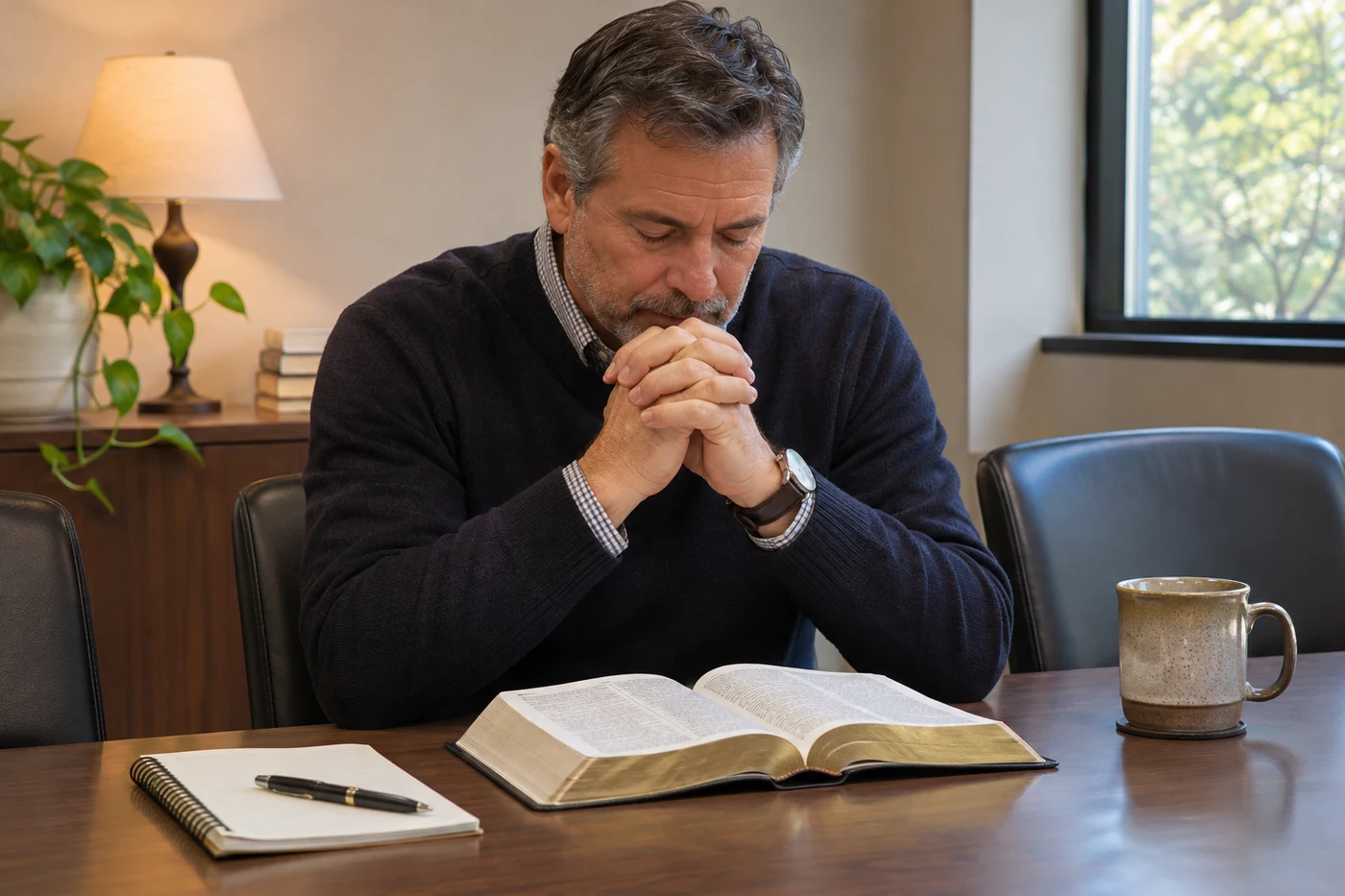
Biblical text: Jesus initiates the encounter. Zacchaeus receives Him joyfully. In response, Zacchaeus promises to give half of his possessions to the poor and says, “If I have taken anything from anyone by false accusation, I restore fourfold.”
Jesus then declares that salvation has come to the house and explains His mission: He came to seek and save the lost.
Interpretation: Zacchaeus does not purchase salvation through generosity. His actions reveal that his allegiance has changed. The man who had used wealth to secure his position is now willing to release wealth to serve others and repair harm.
Jesus offers grace before Zacchaeus presents a cleanup plan. Yet grace does not leave him comfortably unchanged. It reaches his conscience, his finances, his relationships, and the way he uses authority.
The crowd expects condemnation from a distance. Jesus brings truth and mercy close enough to transform a life.
Primary scriptural focus: Jesus seeks Zacchaeus personally, and Zacchaeus responds to that grace with visible repentance—changing how he uses wealth, influence, and responsibility while taking concrete steps to repair harm.
Central truth: Genuine transformation does not stop with changed intentions; God’s grace reshapes how we treat people, handle resources, exercise influence, and make right what our choices have damaged.
Grace is free. Repair may still be costly.
3. Integrity Must Reach the Ledger

Many people want a fresh start without examining the trail behind them. We prefer a powerful new vision, a clean page, and perhaps a dramatic soundtrack. Revisiting old invoices, broken promises, or wounded relationships feels considerably less inspiring.
Zacchaeus does not merely say, “I am going to be a better person from now on.” He addresses both generosity and restitution.
That distinction matters.
Generosity gives where there is need.
Restitution returns what should never have been taken.
Modern application may include:
- Correcting an inaccurate charge rather than hoping no one notices.
- Paying money that is legitimately owed.
- Giving proper credit for another person’s work.
- Admitting when your decision created unnecessary costs for someone else.
- Correcting a misleading statement even when it made you look good.
- Returning property, access, recognition, or opportunity that was unfairly withheld.
For business owners and leaders, integrity cannot remain a personal value printed beneath a mission statement. It must enter pricing, contracts, payroll, expense reporting, sales practices, performance reviews, and the promises made to clients.
For working people, integrity may mean accurately reporting hours, protecting confidential information, acknowledging errors, and refusing to let another person carry the consequences of your decision.
Money is not the only ledger. Relationships keep records too—broken trust, repeated disappointment, words that diminished someone, and responsibilities quietly handed to others.
Not every consequence can be reversed. Not every relationship can or should return to what it was. Sometimes direct contact would be unsafe or inappropriate. But when repair is possible and responsible, changed intentions should become changed behavior.
4. Use Influence to Restore, Not Extract

Zacchaeus had used a system that allowed him to benefit from other people’s vulnerability. After meeting Jesus, he no longer asks, “What am I allowed to take?” He begins asking, “What am I responsible to restore?”
That is a profound leadership shift.
Extraction asks:
- How much can I get?
- How little can I give?
- What can I make people tolerate?
- How can I protect my position?
Restorative leadership asks:
- Who has been affected by this decision?
- What do I owe them—financially, professionally, or relationally?
- What needs to be corrected?
- How can I use my influence to create something more honest?
This does not mean leaders must accept blame for everything that goes wrong. False guilt is not humility, and endless self-accusation does not produce healthy leadership. Responsibility should be truthful and appropriately proportioned.
But defensiveness can become armor against reality. A leader may explain an intention so aggressively that there is no room left to acknowledge impact.
“I did not mean to” may be true. It is not always the end of the conversation.
At work, repair might involve correcting a process that repeatedly disadvantages certain people. In business, it might require honoring a promise that became inconvenient. In daily life, it may mean replacing an excuse with an apology and a plan.
In relationships, trustworthy change usually becomes visible through repeated choices. The apology matters. The changed pattern gives the apology weight.
Reputation management asks, “How do I make this disappear?”
Repentance asks, “How do I become different—and repair what I responsibly can?”
5. Come Down From the Tree and Make It Right

Zacchaeus does not remain above the crowd observing Jesus from a safe distance. He comes down, welcomes Christ, and allows that encounter to reach the practical details of his life.
Transformation eventually has to leave the branch.
Reflection questions:
- Is there an area where I have changed my language but not yet changed my behavior?
- Have my decisions benefited me while creating an unfair burden for someone else?
- Where am I protecting my reputation instead of accepting appropriate responsibility?
- Is there money, credit, time, recognition, property, or trust that I need to restore?
- What would visible, responsible change look like this week?
The R.E.P.A.I.R. action:
- R — Review the record. Prayerfully examine a recent decision, financial matter, workplace issue, or strained relationship.
- E — Examine the impact. Consider what actually happened—not only what you intended.
- P — Plan appropriate repair. Decide what can responsibly be returned, corrected, replaced, or acknowledged.
- A — Apologize without performing. Be direct. Name your action without hiding it beneath excuses or dramatic self-condemnation.
- I — Implement the correction. Make the payment, revise the record, give the credit, replace what was lost, or change the process.
- R — Rebuild through consistency. Let future choices demonstrate that the change is real.
If the situation involves abuse, danger, illegal conduct, or harm beyond your ability to address safely, seek appropriate professional, legal, pastoral, or organizational guidance. Repair should be honest and wise—not reckless.
Real transformation is not proven by how strongly we describe it. It becomes visible in what we do next.
Prayer:
Lord Jesus, thank You for seeking people whom others have dismissed and for offering grace that reaches every part of life. Search our hearts and show us where our choices have harmed others, distorted responsibility, or placed personal gain above integrity. Give us courage to tell the truth without excuses, humility to make appropriate amends, and wisdom to repair what can be repaired. Teach us to handle money, authority, work, and relationships in ways that reflect Your goodness. May our change be more than words. Let it become visible through honest action, restored trust, and lives increasingly shaped by You. Amen.